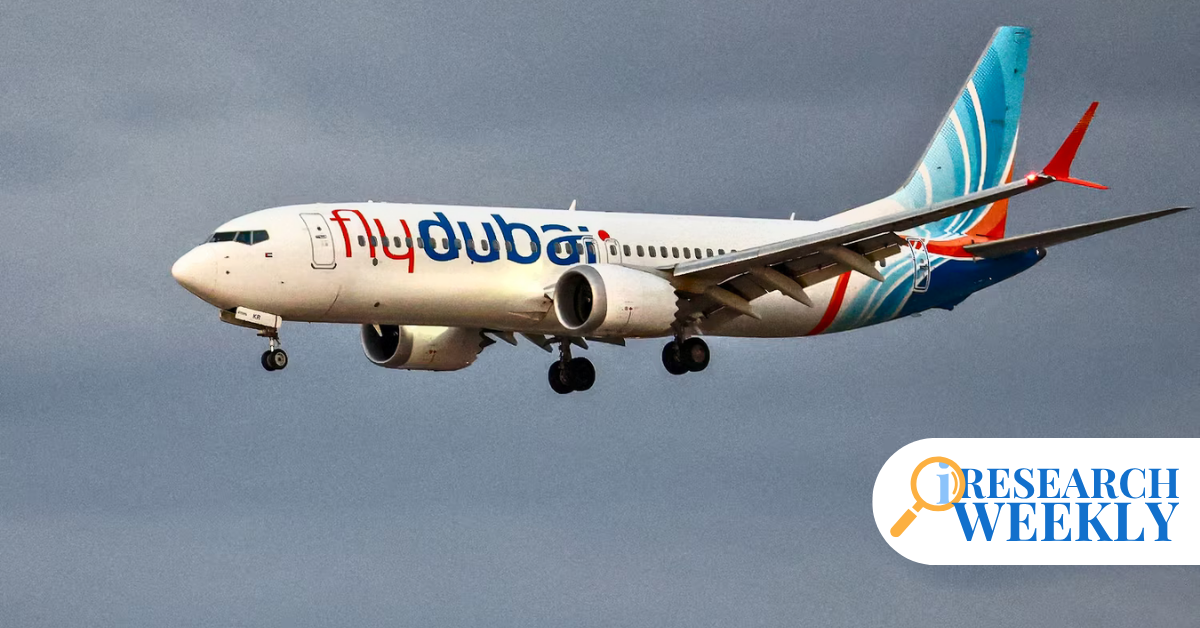
At 8:21 a.m. local time on Wednesday, flydubai Flight FZ1073 was a routine Abraham Accords shuttle: Dubai to Tel Aviv, a Boeing 737 carrying 174 people, most of them Israelis, including 27 children. Minutes later the jet was falling out of the sky. Flight-tracking data showed a drop of roughly 14,000 feet in less than 30 seconds. In the cabin, passengers later said it felt like a roller coaster with no rails. In the cockpit, according to Israeli officials and multiple eyewitnesses, an Omani co-pilot had stabbed the Indian captain, Smit Machchhar, and was trying to drive the aircraft into the ground or perhaps steer it into a populated Tel Aviv location.

What happened next is why 174 people are alive tonight.
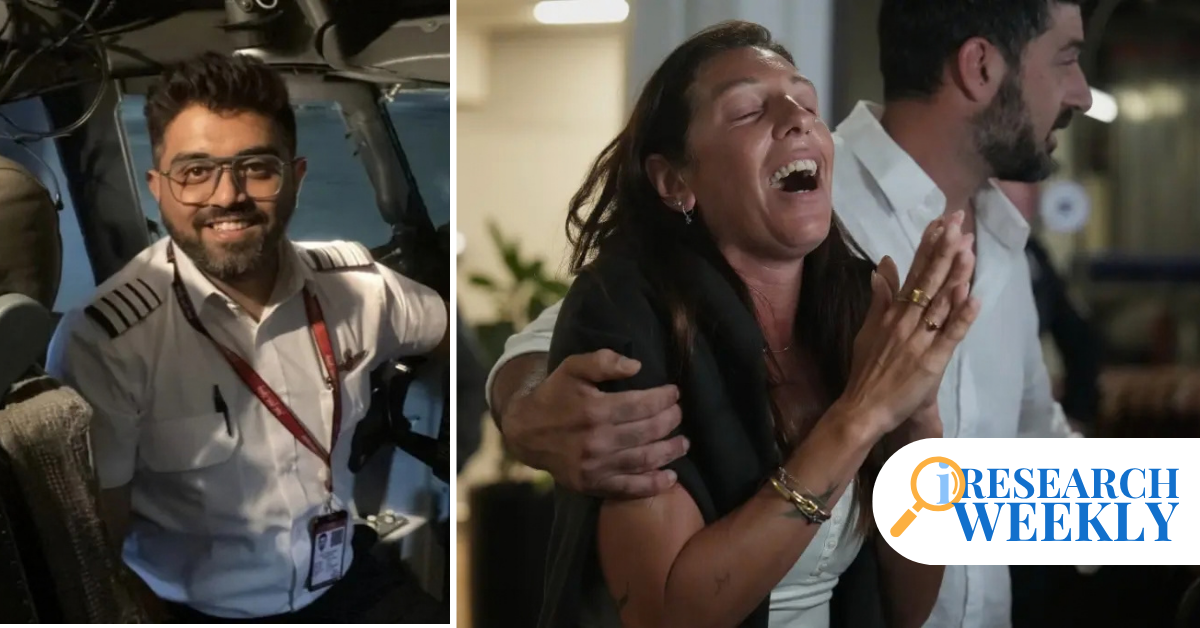
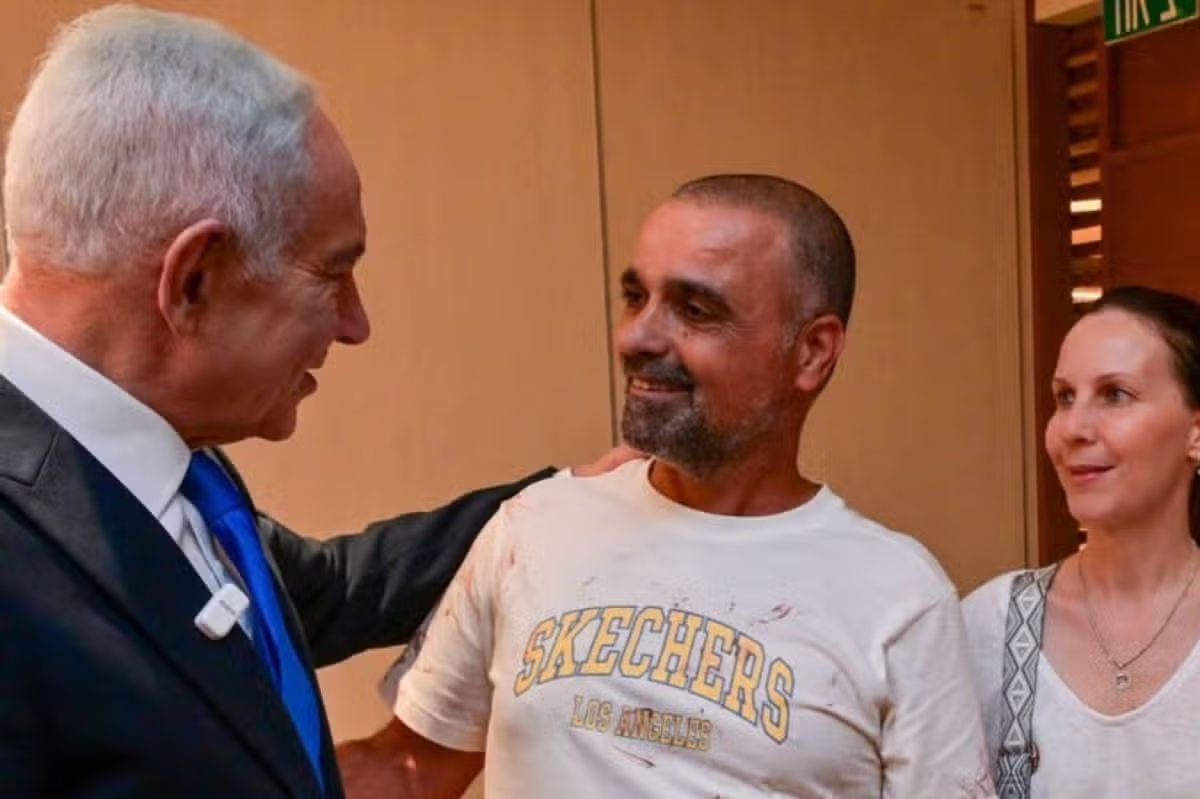
Captain Machchhar, bleeding out, reached the cockpit-door release. Passengers and crew poured in. Yaniv Hayoun put the attacker in a chokehold and dragged him off the controls. Asaf Rajuan and others pinned him for the better part of an hour. Off-duty flydubai pilots sitting in the cabin took the controls and put the plane down at Tabuk, in northwestern Saudi Arabia. Israeli fighters had already been dispatched. Hours later a replacement aircraft brought the passengers home to Ben Gurion. Prime Minister Benjamin Netanyahu met them on the tarmac, embraced Hayoun in a blood-stained shirt, and said: “I see you and I see a lion.”
These are the details we have — of the minutes that almost ended in catastrophe, of the people who refused to let that happen, and of why Israeli leaders now treat the cockpit as a new front in a war that has never stayed on the ground.
The minutes that almost ended the flight
FZ1073 left Dubai International on its normal corridor toward Israel, over Saudi and then Jordanian airspace. For more than two hours nothing unusual registered on public trackers. Then, around 05:21 GMT, altitude collapsed. Flightradar24 recorded a plunge from roughly 33,000 feet to 14,000 in under a minute.
Inside the aircraft the sequence, reconstructed from passenger interviews and official briefings, was this:
The co-pilot attacked Captain Machchhar with a knife. Blood covered the flight deck. The wounded captain, later identified by Netanyahu’s office as an Indian national, fought long enough to unlatch the armored door. A Netanyahu spokesperson told Reuters the captain was “covered with blood on the floor” when he managed the release.
Lights failed or dimmed. People screamed. The nose went down.
Yaniv Hayoun, traveling with his family, later told The Free Press and then Netanyahu himself that he saw his wife and children and understood there was no one else coming. “I saw my wife and children and realized I have to do something.” That was when Hayoun, a maintenance worker, leapt into action.

“There was complete chaos. One of the pilots stabbed another pilot. He tried to crash us,” Hayoun said. “When it leveled out a little, just a little, we managed to get back up. I managed to open the cockpit door with the help of another crewmember. We physically fought with the co-pilot; he was going wild. I put him in a choke hold, took control of him, and dragged him out of the cockpit. Then I called for other Israelis to help restrain him.”
He went back in. The attacker, he said, was on the instruments between the empty seats, trying to wreck the panel so the airplane could not be flown. Hayoun pulled the controls. He later told Netanyahu he is a flight instructor — “that’s another thing I teach” — and that the nose began to come up. Then a professional crew on board took over.
Asaf Rajuan, another passenger who entered the cockpit, spoke afterward with blood still on his forehead. “This is something you do without thinking, just running to save your daughter’s life, your family’s life.” In a separate interview he said they decided it was “a question of being or not being,” held the attacker for about 55 minutes, and landed. “Life is stronger than everything, and we decided to fight for it.”
A doctor among the passengers, identified in Israeli reporting as Mossayev Shota, treated the captain’s head and arm wounds in flight and said the bleeding was brought under control before landing. A 51-year-old man was later taken to an Israeli hospital in mild condition for upper-body injuries. Tabuk airport said both operating pilots were hospitalized.
Passenger Lital Shachaf, after reaching Israel: “I just can say that it was a miracle. It was awful, crazy, and we thank God that we survived it, we didn’t think we will make it but thank God we are in Israel. We are back home.”
Another passenger compared the dive to a roller coaster in clear air. Miriam, speaking through her mother Yasmin Abukasis, described a man with a knife forcing a pilot to the floor and blood everywhere. Miryam Shira Ohayon said the aircraft was “pretty much out of control” while the fight went on. Farewell messages went out from phones in the cabin.
Off-duty flydubai crew traveling as passengers secured the flight deck and flew the approach into Tabuk. The airline’s later statement credited those on-duty crew members traveling on the flight with diverting and landing the jet safely. All souls were accounted for. Replacement aircraft were sent. Passengers, some of them reluctant to board another flydubai plane until they knew who was flying it, finally reached Ben Gurion after 6:30 p.m. local time.
Saudi authorities took the co-pilot into custody. Netanyahu said they would interrogate him. An Israeli official identified the attacker as an Omani national. Oman had no immediate comment. flydubai said the “underlying reasons for the event remained unknown” and warned against “premature speculation.” The UAE’s GCAA called it a “security incident that was brought under control.” Motive, as of Wednesday night, was not publicly proven. Israeli officials nevertheless framed the intent as an attempt to crash a plane full of Jews. Defence Minister Israel Katz called it an “attempted jihadist terror attack.”
“I see a lion”
When the replacement flight landed at Ben Gurion, Netanyahu was waiting. Video released by his office shows him embracing Hayoun, still in the shirt stained during the fight. Hayoun apologized for the blood. Netanyahu told him he did not need to apologize.
“I see you and I see a lion — a big hero.”
Hayoun: “We are a nation of lions.”
Netanyahu: “What you did is just unbelievable. You saved not only the passengers of the plane, but many others.”
Hayoun walked the prime minister through the sequence: screams, lights out, the stabbed captain against the door, the attacker on the avionics, the chokehold, the shout for other Israelis, the moment a real pilot took the airplane back.
What this does to the Accords, and to the air
flydubai flies the Dubai–Tel Aviv route daily. The corridor is a physical expression of the 2020 normalization between Israel and the UAE. Netanyahu met UAE President Sheikh Mohamed bin Zayed Al Nahyan in the Gulf only days earlier. Israel has supplied the Emirates with Iron Dome batteries and operators against Iranian fire. The route itself crosses Saudi airspace that was closed to Israeli-connected traffic for a generation.
Doron Spielman, a Netanyahu spokesperson, told Reuters the policy response must be strict: “Every pilot that is going to be flying into Israel, we are going to know the pilots’ identities, know who they are, and do some type of security check.” That is easier announced than implemented on foreign carriers, in foreign hubs, under international rules. It is also the logical conclusion if the threat model is no longer a passenger with a box cutter but a man already in the cockpit.
The wider threat picture Israeli officials want the public to see is not a single Omani first officer. It is a three-year war that did not end when the last hostage deal or the last strike on Iran faded from the chyron. Hamas still exists. Hezbollah is damaged and not gone. Houthis still shoot at ships and, periodically, at Israel. Iranian networks still plot abroad — as may be the case in our previous coverage of a suspected terrorist plot near a UK airbase used by American bombers. Jewish communities from Sydney to New York have lived with a surge in assaults and synagogue threats since October 7. A commercial cockpit on a “peace flight” is simply another addition to the antisemitic madhouse.
None of that is proof of the co-pilot’s motive. flydubai asked the world not to invent one. Responsible reporting should hold that line even when governments do not. What can be said without speculation: a knife came out at cruise altitude on an Israel-bound aircraft; the captain was blugeoned; the airplane was flown toward the earth; civilians and crew reversed it; the suspect is in Saudi custody; Israel will now treat every inbound flight deck as a vetting risk.
The first draft of every disaster is chaos. The second draft, if a society is lucky, is a list of people who moved. Israel has been writing that second draft since October 7, in tunnels, at kibbutzim, and now in a narrow aisle between business class and a locked door that finally opened. The rising threat is real: from militias, from states, from individuals who need only a credential and a blade. The counter-threat, on Wednesday, was a wounded Indian captain and a handful of Israeli fathers who decided that the dive would not be the last thing their children felt.
They landed in Tabuk. They came home after dark. The investigation is just beginning. The vetting of pilots, Netanyahu promised, start now.