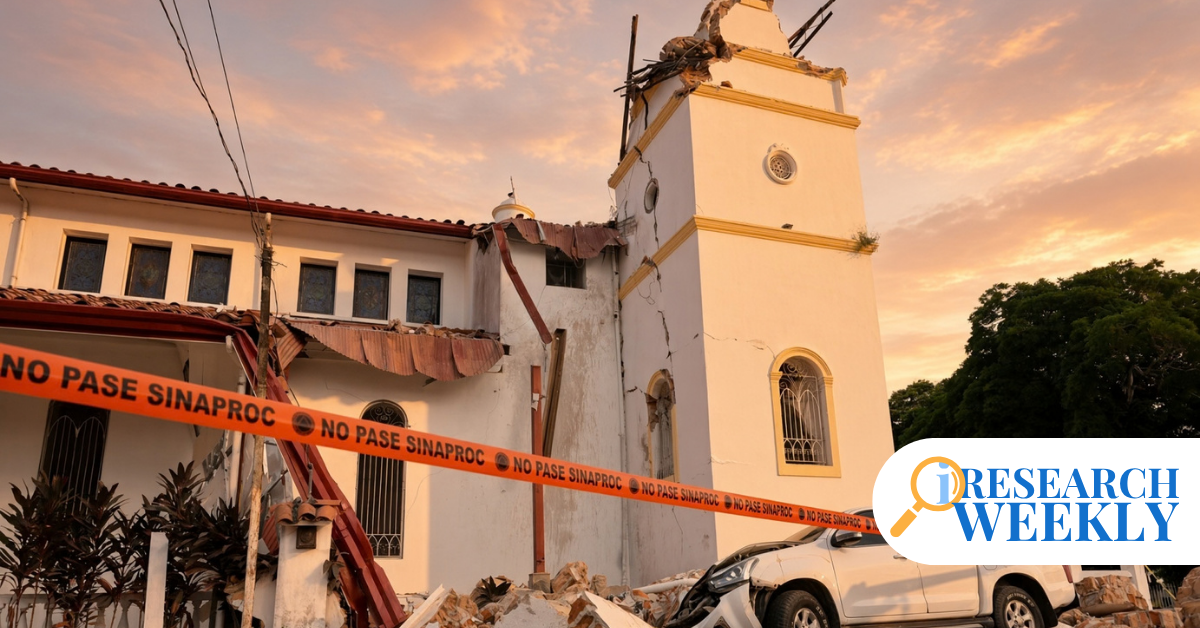
On Saturday, October 17, 2026, masked far-left protesters set the 143-year-old Limoges Town Hall on fire. The building, constructed in 1883 and listed as a historic landmark since 1975, is now largely lost. Local prefect Maurice Barate told AFP the roof collapsed onto lower floors except the west wing. Two-thirds of the exterior already disappeared. He called the attack a deliberate act by hooligans and a catastrophe for heritage.

The Scene in Limoges and Across France
Witnesses saw hooded groups torch police cars outside the building. The rioters then smashed windows, entered, and started the fire. The blaze spread quickly. The campanile collapsed while crowds watched. Looters hit nearby shops. The violence came at the end of a demonstration that began with yellow-vest veterans, students, and others protesting the high cost of living.
French authorities said the national protests, now in their fourth week, drew more than 550,000 people across more than 100 marches. Interior Minister Laurent Nuñez reported roughly 400 arrests on Saturday. Later figures from the prime minister reached about 1,200. Dozens of officers suffered injuries. Masked groups tried to break into city halls in Lille and Calais and a police station in Brest. Further clashes broke out in Rennes, Toulouse, Montpellier, Grenoble, and Paris. Police used tear gas and water cannons against those throwing fireworks and projectiles in Place de la République.
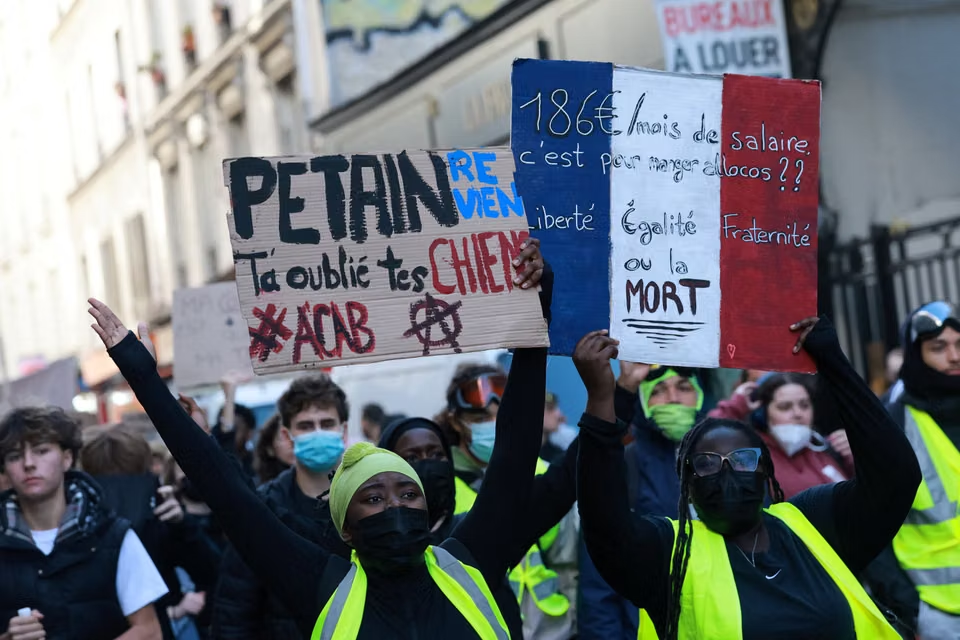
President Emmanuel Macron said there is no place for violence in our republic. He added that those who attacked prefectures, businesses, or town halls will face prosecution and punishment. Officials blamed the worst violence on extremely violent, radical far-left groups and the ultra-left. They distinguished these actors from the bulk of peaceful demonstrators.
The Red-Green Networks Amplifying the Unrest
This escalation fits a pattern iResearch Weekly has previously examined in coverage of the red-green alliance. That alliance is the tactical convergence of hard-left and communist organizers with Islamist or pro-Palestinian networks against Western institutions. A recent Fox News Digital investigation found that earlier phases of France’s student and education protests involved a network of roughly 50 groups. Only about 15 were student or youth organizations. The rest included labor unions, communist and socialist groups, La France Insoumise, the French Communist Party, and Palestinian advocacy elements. On the streets, hammer-and-sickle banners appeared alongside Palestinian flags. BreakThrough News, a New York-based pro-communist outlet, helped frame the actions internationally as resistance to austerity.
The same ecosystem has surfaced in the United States. iResearch Weekly reported in March 2025, citing an intelligence source, that Chinese Communist Party-linked funding supported 2024 pro-Hamas campus and street protests. Progressive organizers acted as collaborators, promoting CCP narratives while amplifying anti-Israel sentiments. In October 2025, a Government Accountability Institute analysis traced nearly $300 million in dark-money funding—channeled through networks associated with Soros, Arabella, Tides, and others—to “No Kings” protest organizers and related groups. Those same donor circuits have backed radical organizations that overlap with the red-green model.
Neville Roy Singham’s Funding Role

The financial and propaganda backbone traces to Neville Roy Singham. The American-born tech entrepreneur sold Thoughtworks for roughly $785 million in 2017. He relocated to Shanghai and has directed hundreds of millions into a global web of far-left media and organizing hubs. Singham has long links to Chinese Communist Party-aligned efforts. He is married to CodePink co-founder Jodie Evans. As iResearch Weekly detailed in its September 2026 examination of Code Pink’s role in recent cultural controversies, the group’s messaging shifted toward stronger pro-Beijing and anti-Israel lines after Singham’s funding arrived. Code Pink has functioned as one notch in the broader red-green network that treats Western institutions and Israel as linked targets.
Fox reporting and related analyses describe the same sugar-daddy pattern seen in U.S. campus and infrastructure disruptions. Organizers amplify organic complaints, radicalize them, and project them as systemic revolt. Direct cash transfers to Saturday’s arsonists remain undocumented. Still, the organizational ecosystem, messaging, and transnational amplification align with the network Singham has funded and coordinated for years—the same network tied to the dark-money flows and CCP-linked protest support examined in prior iResearch Weekly reporting.
A Broader Pattern
French officials have condemned the destruction of heritage and attacks on public buildings. The Limoges fire is not an isolated act of hooliganism. It is the latest visible outcome of a red-green strategy that treats civic infrastructure and national symbols as legitimate targets. As iResearch Weekly has noted in prior examinations of this alliance—from U.S. campus disruptions and “No Kings” funding to Code Pink’s activities—the shared objective is the erosion of Western political and cultural cohesion, regardless of the stated local demand. Prosecutions may follow individual acts. The networks that mobilize, fund, and narrate the violence continue to operate across borders.