Spoiler warning: This review covers major plot points, including the furnace climax and the film’s take on the “fourth man.” Stop here if you want those moments unspoiled.
What the film is

Daniel and the Fiery Furnace retells the opening chapters of the Book of Daniel. Canadian brothers Matthew and Daniel Kooman wrote, directed, and produced it. Travis Mann and star Mena Massoud also produce. EKKL Entertainment released it in U.S. theaters.
Massoud, known for Disney’s live-action Aladdin, plays Daniel. Elijah Alexander, known as Atticus in The Chosen, plays King Nebuchadnezzar. Chandan Roy Sanyal plays Ashpenaz, the chief eunuch who watches over the young Hebrews.
A story told by firelight
From the first frames, the movie feels like a cultural journey. A Bedouin elder sits beside a campfire, sand and camels at the edge of the light, and recounts Daniel’s history to fellow travelers in a voice shaped for film.
The device works. It presents Scripture as living tradition passed around a fire rather than distant mythology. The travelers’ identities receive a late and clever reveal—one this review will leave for you to discover.
The early plot is less sure. It feels slightly rushed and disjointed. We still follow Daniel, Shadrach, Meshach, and Abednego from exile into Babylon. We watch them rise above other servants of the king because they can interpret dreams. The beats are there. The first act just hurries past the true cost of that rise.
Where the images work
At times the film uses AI visual effects. It does not lean on them in an annoying way, but as accent. Most of the digital work builds scenery and settings.
Some of the strongest early shots show Hebrew captives moving from the desert to the grand city of Babylon. Those procession scenes use AI with taste. They look big without looking fake.
Acting that carries the plot
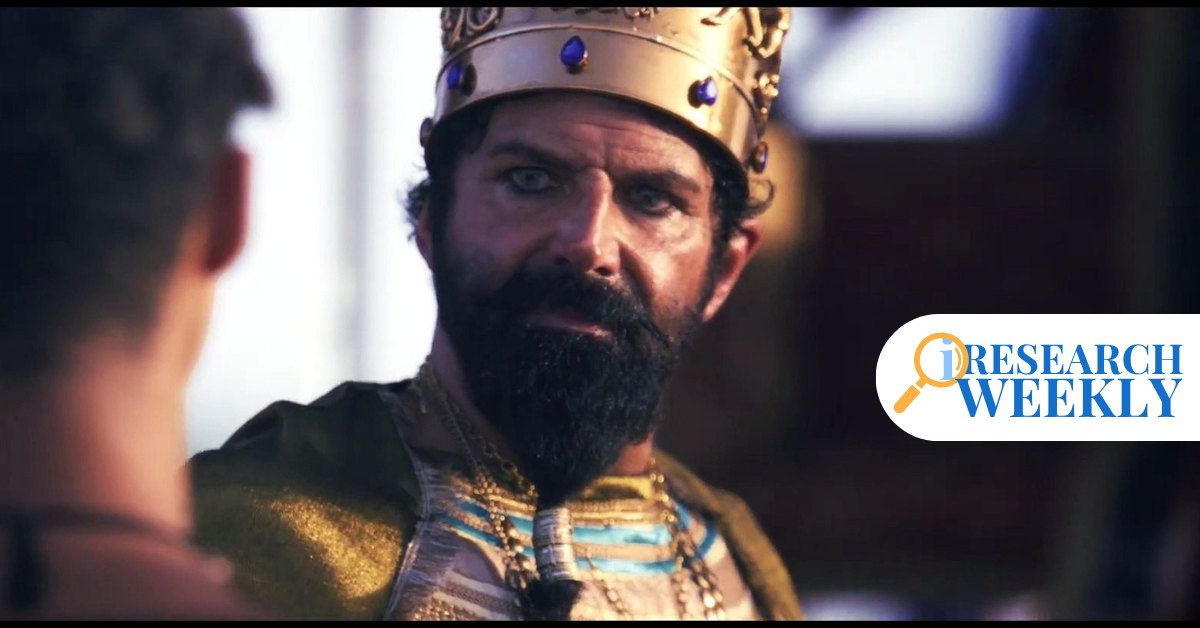
Alexander is the standout. You can almost smell Nebuchadnezzar’s cologne. He fills the room. The king is charismatic and charming, then narcissistic and unpredictable. The mix feels real—and award-worthy.
Sanyal is very strong as Ashpenaz. Other supporting roles hold up well enough. Alexander still does the heavy lifting. His presence makes weaker scenes play better than they would without him.
Where the budget shows
The film was made on a modest budget, and at times it shows. Some costumes look thin.
Most extras are clearly Indian. Wider ethnic casting in Bible movies is welcome—Scripture crosses many lands and skin tones. Consistency is the problem. Lead actors often do not look like the crowd they are meant to belong to. The mismatch can pull you out of the believability of the world at times.
The script also slips in later Christian symbols the Book of Daniel never mentions. After the furnace, Daniel forges a golden cross. The moment is sincere and points ahead to future redemption. Still, the imagery is noticeably anachronistic.
The end-credits song is the last sour note. An epic biblical story deserves an epic close. Instead, the closing track sounds like youth-group rock or the filler between speakers at a conservative conference: quasi-hip guitars, a four-chord melody, no awe.
The scene that justifies the ticket
Those flaws fade when Shadrach, Meshach, and Abednego go into the fire. The climax is so strong it atones for the earlier moments of cheap fabric and thin world-building.
Spoiler alert.
The furnace scene weaves in historical details that make the famous story clearer. The sequence of shots is careful and bold. Many in the audience, including this writer, fought back tears and tried to clear a lump in the throat.
The fourth figure is not a vague glow. The film treats him as supernatural and fully personal—God with the three Hebrews. He enters the furnace from heaven with the force of a meteor. His face evokes the Shroud of Turin – a clever and daring choice.

Inside the furnace the three fall to their knees and weep before their Redeemer. Outside, the crowd stands frozen. Nebuchadnezzar names the fourth figure as appearing “like a son of the gods.” Daniel, weeping, calls him “the Son of Man”—a subtle theological Easter egg that glances toward Daniel 7, where the prophet records his vision of a divine King who will one day rule the world in righteousness.
This scene alone felt worth the price of admission.
The verdict
Daniel and the Fiery Furnace is a well-made Christian movie for a growing faith-based market. It does not have the best of everything the genre has ever offered. With that being said, parts of it do feel fresh and new. For films that often work with small budgets, this one points forward: more scale, more craft, and one unforgettable image of deliverance. Go see it!
If you’ve already seen Daniel and the Fiery Furnace, share what the furnace scene—and the rest of the film—did for you in the comments below. We read them!